


More efficient clinical consultations with specialty-specific apps
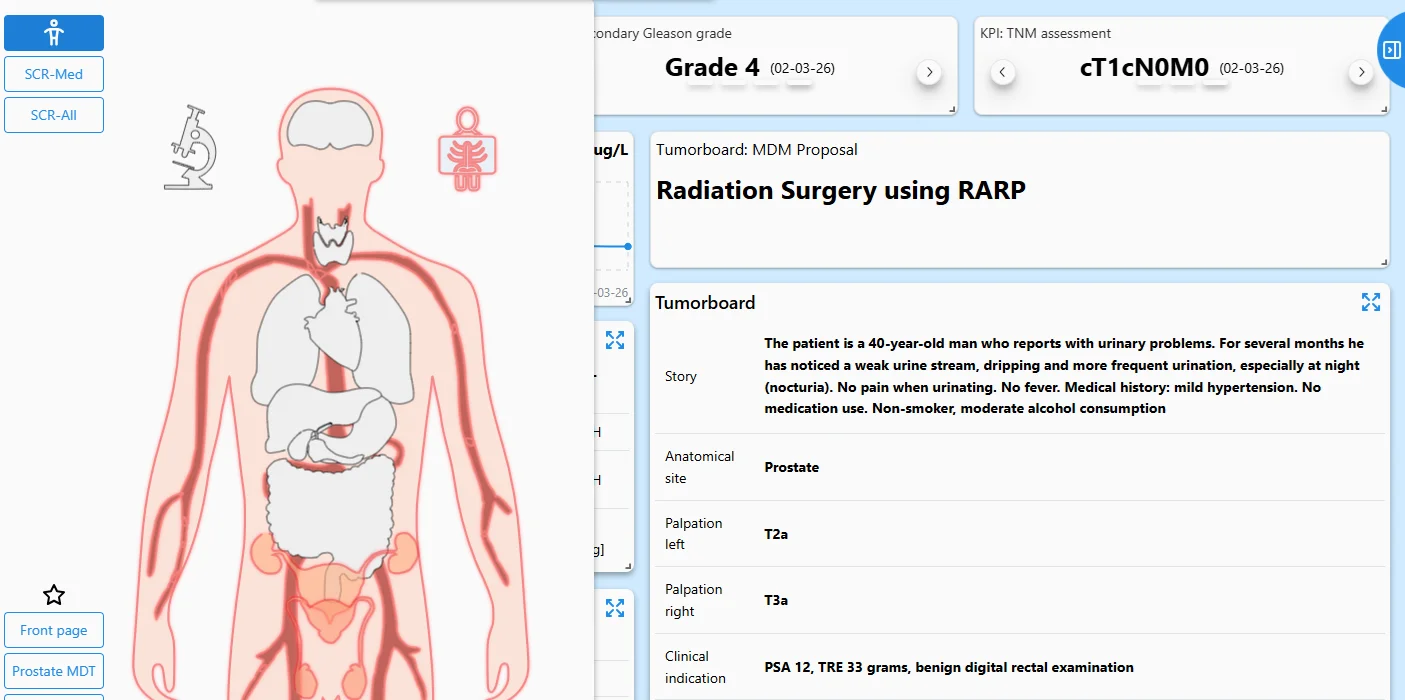
Make clinical consultations more efficient through specialty specific applications that bring relevant patient information into a single view. Clinicians can review imaging, lab results, and patient records while documenting the encounter, with less need to switch between systems. By adapting to the clinical context, Daigo Health reduces documentation effort and supports more focused patient interactions.
Designed for disciplines such as cardiology, oncology, and orthopaedics, the applications adapt to different clinical phases and workflows – from first consultation through follow up care – while giving the whole care team a consistent, up to date picture of the patient.
Solutions integrated with vitagroup HIP:
Daigo Insight
Daigo Insight consolidates patient data from multiple sources (FHIR, openEHR, DICOM) into a single view, combining imaging, lab results, and structured data
Daigo Engage
Daigo Engage supports structured data entry during consultations, reducing documentation effort while maintaining compliance with clinical templates
Daigo Flow
Daigo Flow provides guidance within care pathways, showing where the patient is and suggesting next steps based on available data and guidelines
Key benefits:
- Supports specialty-specific workflows (e.g. cardiology, oncology, orthopaedics)
- Reduces documentation effort and associated errors
- Cuts time time spent switching between systems and searching for information
- Improves care coordination by providing a shared, longitudinal view of patient data
- Integrates with existing hospital IT systems using open standards
- Scales across departments and different care settings through configurable templates and deployment options
Key features:
- Aggregation of patient data from multiple sources (EHR, imaging, lab systems) into a single interface
- Adaptive user interface aligned with clinical phase (e.g. first consult vs follow-up)
- Structured data entry using configurable clinical templates
- Integration with FHIR, openEHR, DICOM, and XDS
- Visualisation of patient position within care pathways
- Guidance that adapts to the patient’s data and relevant clinical guidelines
- Deployment options including cloud, on-premise, or SaaS
Current usecases
Daigo is used to support specialty workflows such as cardiology, where clinicians need to review imaging, lab results, and longitudinal patient data in one place. In orthopaedics, it supports pre and post operative documentation and helps teams stay aligned with surgical protocols. In oncology, it enables multidisciplinary teams to work from a shared view of patient data, supporting tumour board discussions and longitudinal care planning.