


Measure what works in patient care
More informed clinical decision-making, improved patient engagement, and better resource allocation by capturing patient-reported outcomes across clinical pathways. By reducing reliance on fragmented or proprietary solutions, organisations can collect and use patient reported outcomes data consistently across services, supporting more coordinated and value-based care.
Patients can report outcomes both in clinical settings and remotely, with data captured digitally and made available for analysis, reporting, and benchmarking.
Outcomes data can be analysed using real-time dashboards and statistical tools and exported for research and benchmarking.
Solutions integrated with vitagroup HIP:
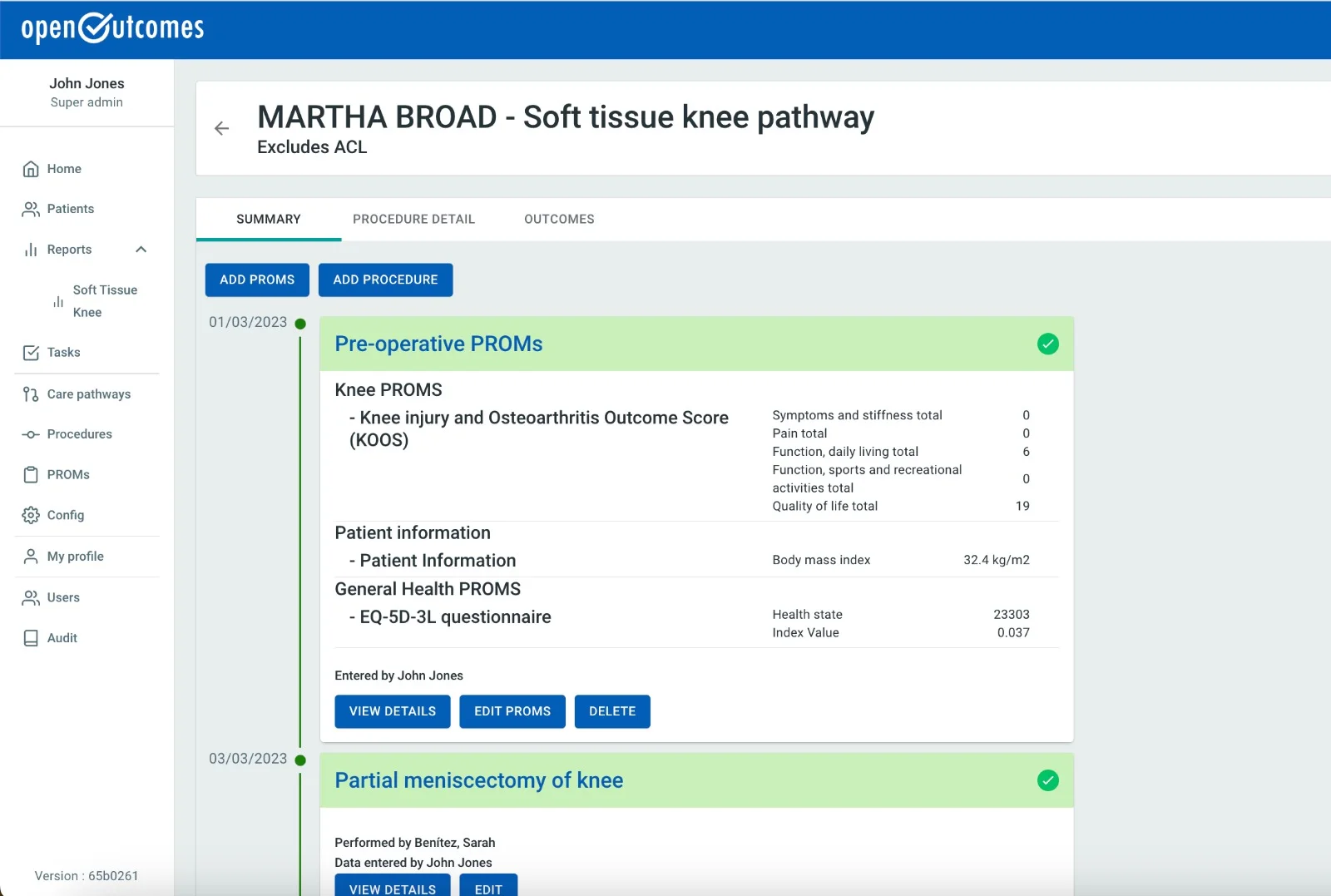
openOutcomes
An open-standards platform for the collection, management, and analysis of PROMs and PREMs across clinical pathways.
Key benefits:
- Saves time and resources by automating PROMs/PREMs workflows
- Increases response and completion rates through flexible, multi‑channel data capture
- Improves patient engagement by enabling patients to report outcomes digitally and at home.
- Supports value‑based care by making outcome and experience measures part of routine clinical pathways
Key features:
- Specialty and pathway agnostic design
- Multi‑channel patient data capture (clinic, web, mobile, paper)
- Workflow automation for reminders and missing questionnaires
- Dashboards, analytics, and reporting
- NHS‑aligned deployment and governance (cloud or on‑premise)
Current usecases
PROMs and PREMs used across multiple specialties and care pathways, including orthopaedics, ophthalmology, cancer care, and general surgery.
Supports outcome tracking in areas such as hip and knee replacement, physiotherapy pathways, cataract treatment, and oncology quality-of-life assessment.
Deployments include Sandwell & West Birmingham NHS Trust, where it is integrated with the EPR for real‑time outcome tracking and Patient‑Initiated Follow‑Up (PIFU) models.