September 2026
Following the announcement of the collaboration between the HL7 and openEHR communities (opens in new tab), we want to share some insights how we use both standards in HIP, our open SaaS platform for healthcare data management.

For vitagroup, which has been building its portfolio for several years on the basis of openEHR and FHIR, and has deployments in over 30 hospitals in Germany, the cooperation is highly welcomed.
As HIP’s value proposition is vendor-neutral digitalization, we started with the definition of an internationally standardized and 100% open data layer.
openEHR International provides (opens in new tab) free specifications to build an open platform which serves as the foundation for a central data hub and enabler of an application ecosystem of natively interoperable apps.

Its standardized system and information architecture provides the foundation for a transactional data backend, which serves in systems including:
In this sense, you can think about openEHR as the equivalent of the databases you find in EMR systems like Cerner or Epic. Of course with the big difference that openEHR is vendor-neutral, open, standardized and comes with a powerful software development, modelling framework and a globally active tooling ecosystem.
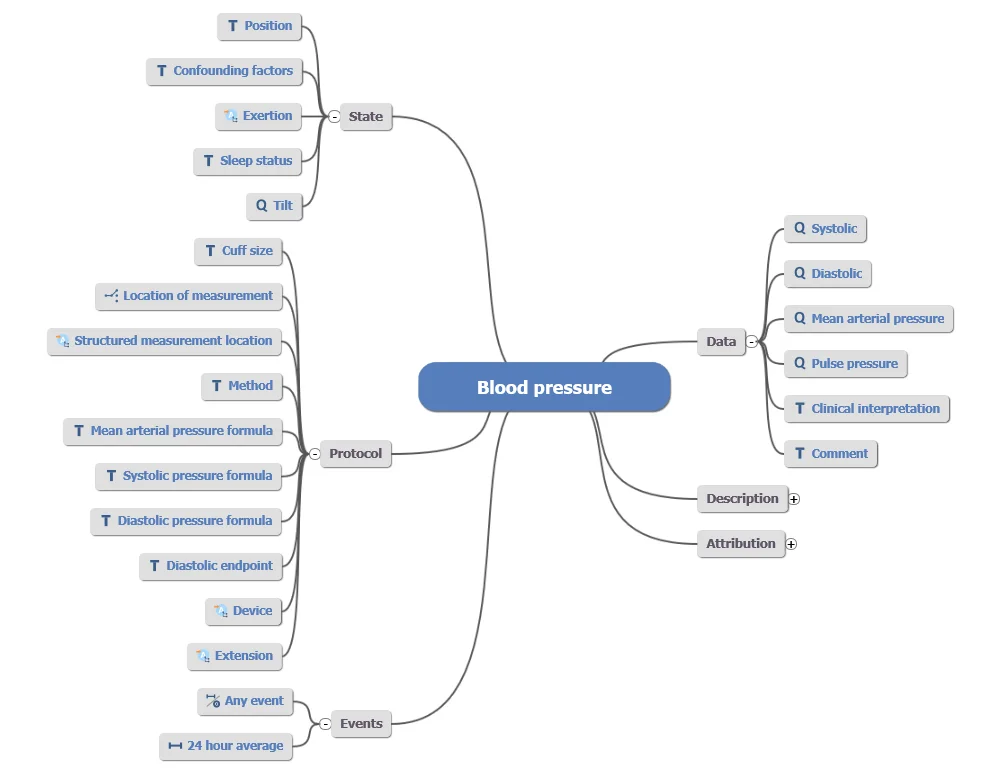
The clinical content in openEHR is based on an international, community-driven modelling approach, which provides a growing library of carefully curated data models (called Archetypes). Archetypes aim for a maximum dataset, which means they can be reused across different clinical domains and use-cases to unambiguously capture information for the electronic health record. The openEHR system can digest new Archetypes at any time and thereby flexibly enhance the clinical domains and data points covered.
In our HIP, openEHR provides the technology to store data long-term and build an ecosystem of natively interoperable apps. The combination of a shared architecture, strong software development capabilities combined with the clear separation of applications from data, allows for the long-term management of data “for life”.
The capabilities of openEHR are complemented by using FHIR. FHIR provides (opens in new tab) technical resources, tools and methods to define standardized APIs in clinical application systems. This way, existing systems can provide a standardized way of accessing and exchanging healthcare information. In today’s world of proprietary system architectures, it provides healthcare systems with the ability to enhance interoperability by mandating vendors to use this standard.
FHIR also provides a foundation to connect applications like patient portals and apps to platforms through its API, helps standardizing the authentication and authorization workflows of third party applications (through SMART on FHIR) as well as the definition and orchestration of clinical processes, complementing the messaging exchange of HL7 v2.

Patients, care providers and the healthcare system at large greatly benefits from the combination of both standards as applied in HIP:
As FHIR was developed with the goal in mind to provide an API for “blackbox” systems and does not strongly interfere with system internals, it provides good capabilities to play nicely a broad range of system designs. In combination with openEHR, users get these advantages plus the benefits of a standardized “whitebox” system with strong data governance and modelling as well as software development capabilities.
From this point of view, the collaboration between openEHR and FHIR can only further advance this combed approach. From our perspective of using both standards in our product, we see some potential fields of collaboration for the benefits of healthcare providers, patients, and system vendors:
Both standards on their own are very valuable for the healthcare system and the joint use provides even greater benefits and a real-vendor independent data platform. The dual approach not only ensures that medical data is readily accessible when and where it’s needed but also maintains its accuracy and relevance over time, which is vital for chronic disease management, comprehensive care, and overall patient safety.
The prospect of the collaboration of HL7 and openEHR International only makes us more excited to build the foundation of the data platform, the operating system, for tomorrow’s healthcare systems.
Article 0 of 0
September 2026
September 2026